
Arrow Ballistics Study | 2026
Vane Steering Efficiency
May 13, 2026
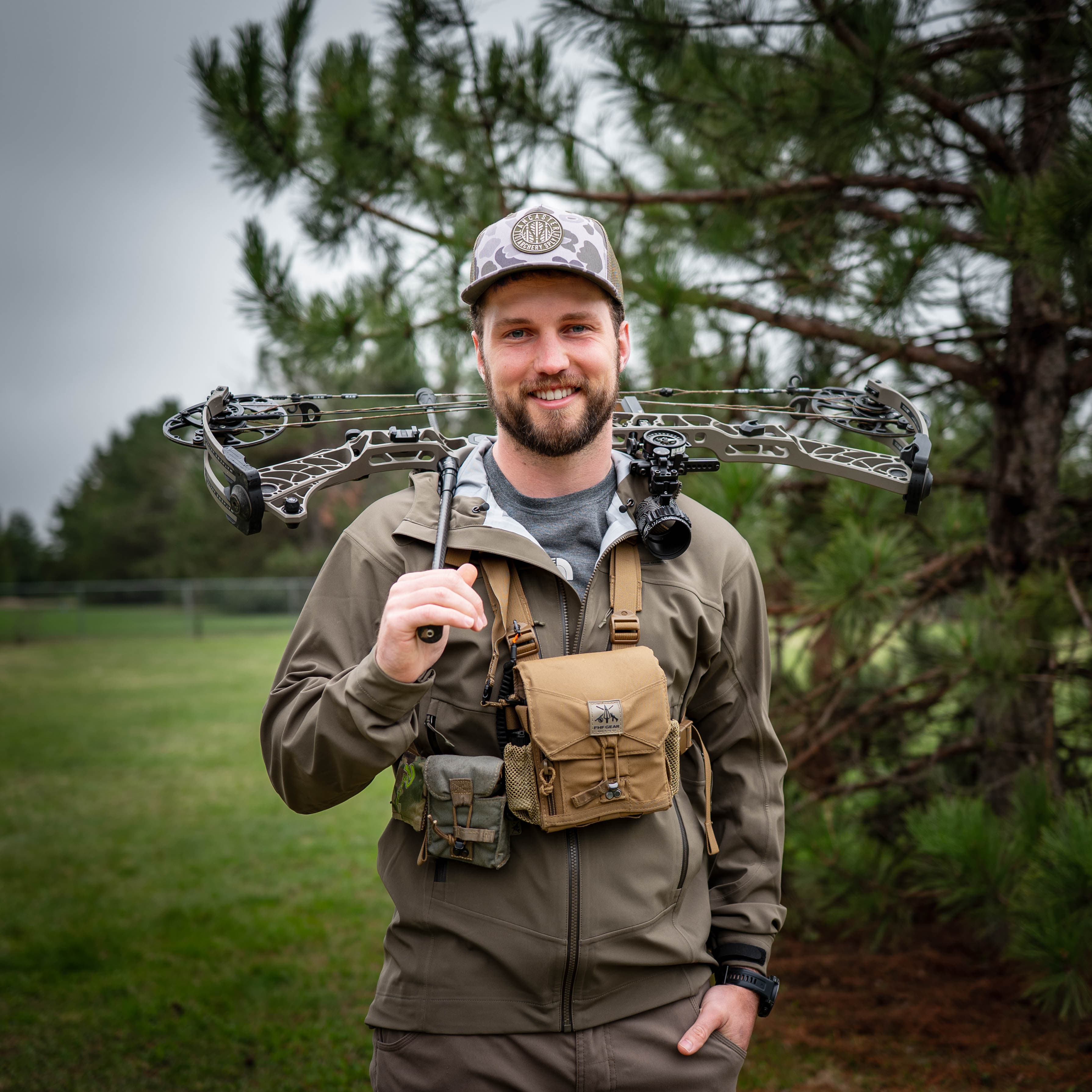
Tristan Litke
Founder, Precision Cut Archery
Overview
Restorative lift is only half the vane question. The other half is what you pay to get it.
A vane that steers a fixed-blade broadhead well is useful, but it still has to fit the arrow you want to build. You might want lower total vane weight to keep the arrow light, lower drag to reduce wind drift and retain energy, lower height for cable / rest / sight clearance, or lower noise to reduce an animal's reaction to the arrow.
This article looks only at standard-speed vanes, because that is the set where we have all four efficiency axes: total vane weight, aerodynamic drag, vane height, and deer-weighted in-flight noise.
Each plot puts one cost on X and torque-induced broadhead drift from field point on Y. Lower drift means more restorative lift. Lower-left is the efficient corner: less cost and more steering.
Test Methods
This article combines measurements from the component test protocols: restorative lift, drag, and sound. For details, see the Restorative Lift, Drag, and Sound Testing methods pages.
Quick Tips
Hover over the dots in any plot to see the build configuration and results details.
These are lower-left plots. Lower X means less of the thing we are trying to minimize. Lower Y means less broadhead drift from field point, which means more restorative lift.
Each plot has a fit line. Use it for the broad trend, then judge the individual dots. The best build depends on which cost you care about most.
Weight vs. Steering
Total vane weight is the cleanest arrow-build tradeoff. More vanes, or heavier vanes, add grains to the back of the arrow.
The overall trend is what you would expect: better steering generally comes with more total vane weight. But the tradeoff is not perfectly linear. The AAE Hybrid HP 3-fletch is the standout here, sitting near the top of the steering results with only about 18gr of total vane weight.
Other dots worth checking: DCA Mini Sabre 3-fletch for low weight and low drag, TAC Driver High Profile 2.25 for a light package with decent steering, and Flex Fletch FFP-225 4-fletch if you care more about keeping the vane package very light.
Standard Speed Vanes | Total Vane Weight vs. Torque-Induced Broadhead Drift from Field Point
Per-build total vane weight vs. torque-induced broadhead drift from field point. Lower-left is the efficient corner: less vane weight and less broadhead drift.
Drag vs. Steering
Drag is the downrange cost. More drag means more drop, more wind drift, and less retained energy.
The tradeoff is clear here too. The hardest-steering builds are not the lowest-drag builds. The AAE AIRAZR Talon 3.0 had the lowest drift in this test, but it was not cheap on drag.
The efficient middle is more interesting. DCA Super Sabre and AAE Hybrid HP both steered well without living at the very top of the drag range. DCA Mini Sabre 3-fletch and AAE AIRRZR 23 4-fletch are also worth a look if you want to stay lower on drag and accept a little more broadhead drift.
Standard Speed Vanes | Drag vs. Torque-Induced Broadhead Drift from Field Point
Per-build aerodynamic drag constant vs. torque-induced broadhead drift from field point. Lower-left is the efficient corner: less drag and less broadhead drift.
Height vs. Steering
Vane height is the clearance cost. Taller vanes can run into cable, rest, sight, or face-contact constraints faster than shorter vanes.
Height still matters for steering. The shortest 3-fletch packages did not produce the best restorative lift, but a taller vane is not the only path. The AAE AIRRZR 23 5-fletch and Flex Fletch FFP-300 4-fletch both sit on the height tradeoff front with strong steering from moderate vane height. Flex Fletch FFP-225 4-fletch is the lower-height option if you can live with less steering, and AAE AIRAZR Talon 3.0 is the hard-steering option if height clearance is not your bottleneck.
That matters if clearance is tight. You can add steering with fletch count and vane choice, not just with a taller profile.
Standard Speed Vanes | Vane Height vs. Torque-Induced Broadhead Drift from Field Point
Per-build vane height vs. torque-induced broadhead drift from field point. Each point is one vane build.
Noise vs. Steering
Noise is the animal-reaction cost. This plot uses deer-weighted overall peak loudness, so lower X is quieter to a whitetail.
This is where the Flex Fletch builds look strongest. The FFP-360 was the quietest vane in the standard-speed test and still held drift to about 6.3in. The FFP-300 4-fletch steered harder, around 5.4in of drift, while staying nearly as quiet. Bohning Heat 4-fletch and UV Vane also sit in the quieter half of the chart, though they give up more steering than the best Flex Fletch dots.
If you are optimizing for quiet fixed-blade steering, the FFP-300 4-fletch is the dot to look at first. If absolute quiet matters more than the last inch of steering, the FFP-360 is still the floor.
Standard Speed Vanes | Vane Noise vs. Torque-Induced Broadhead Drift from Field Point
Per-build deer-weighted overall peak loudness vs. torque-induced broadhead drift from field point. Lower-left is the efficient corner: less noise and less broadhead drift.
Takeaway
Vane steering efficiency is a tradeoff front, not a single winner.
Four dots stand out for different reasons: AAE Hybrid HP for hard steering without a heavy package, Flex Fletch FFP-300 4-fletch for strong steering with very low noise, AAE AIRRZR 23 5-fletch for strong steering from modest vane height, and Flex Fletch FFP-225 4-fletch for a low-height / low-weight compromise.
If you are looking to optimize for more than of axis at once, check out the Vane Performance Overview article. There, we have a plot showing restorative lift, drag, and noise all at once.
A few caveats:
- This is standard-speed vane data only. We do not have the same full metric set for every high-speed vane build.
- Vane height here is manufacturer-reported vane height. Actual height might vary slightly.
- Sound testing was run under the acoustic protocol, while restorative lift and drag came from the main component test protocols. The plots are still useful for build tradeoffs, but they are not all measured from the same bow setup.
- These plots do not include terminal performance, broadhead durability, or how much steering your personal setup actually needs.
Written by
Tristan Litke
Founder, Precision Cut Archery
Tristan Litke is the founder of Precision Cut Archery, a bowhunter, and a software engineer. For the 2026 Arrow Ballistics Study, he and his team led experiment design, data collection, analysis, and development of the website you're reading right now.