Background
Nearly two years ago, James Yates (@yates_in_the_backcountry) pitched an idea: an archery ballistics study done right.
The goal was simple: quantify the ballistic performance of various arrow designs, in a controlled environment, with complete transparency. Without commercial influence or industry bias.
After a year of planning, assembling the right team, and countless hours of hard work, we're proud to share what we've found.
We hope these results inform—and maybe even challenge—some of our long-held assumptions.
They certainly have for us.
| Tristan Litke Precision Cut Archery, Founder and CEO
The Team
Meet the people and companies who made this project possible.
James Yates
Archery Editor for Western Hunter, full-time chemical engineering consultant, and passionate backcountry bowhunter, James sparked the idea for this project, recruited the team, and drove it forward at every stage.
Tristan Litke | Precision Cut Archery
Founder of Precision Cut Archery and a software engineer, Tristan partnered with James from day one. He and his team led the data collection and analysis, bringing advanced ballistics tooling to the study.
Easton Archery
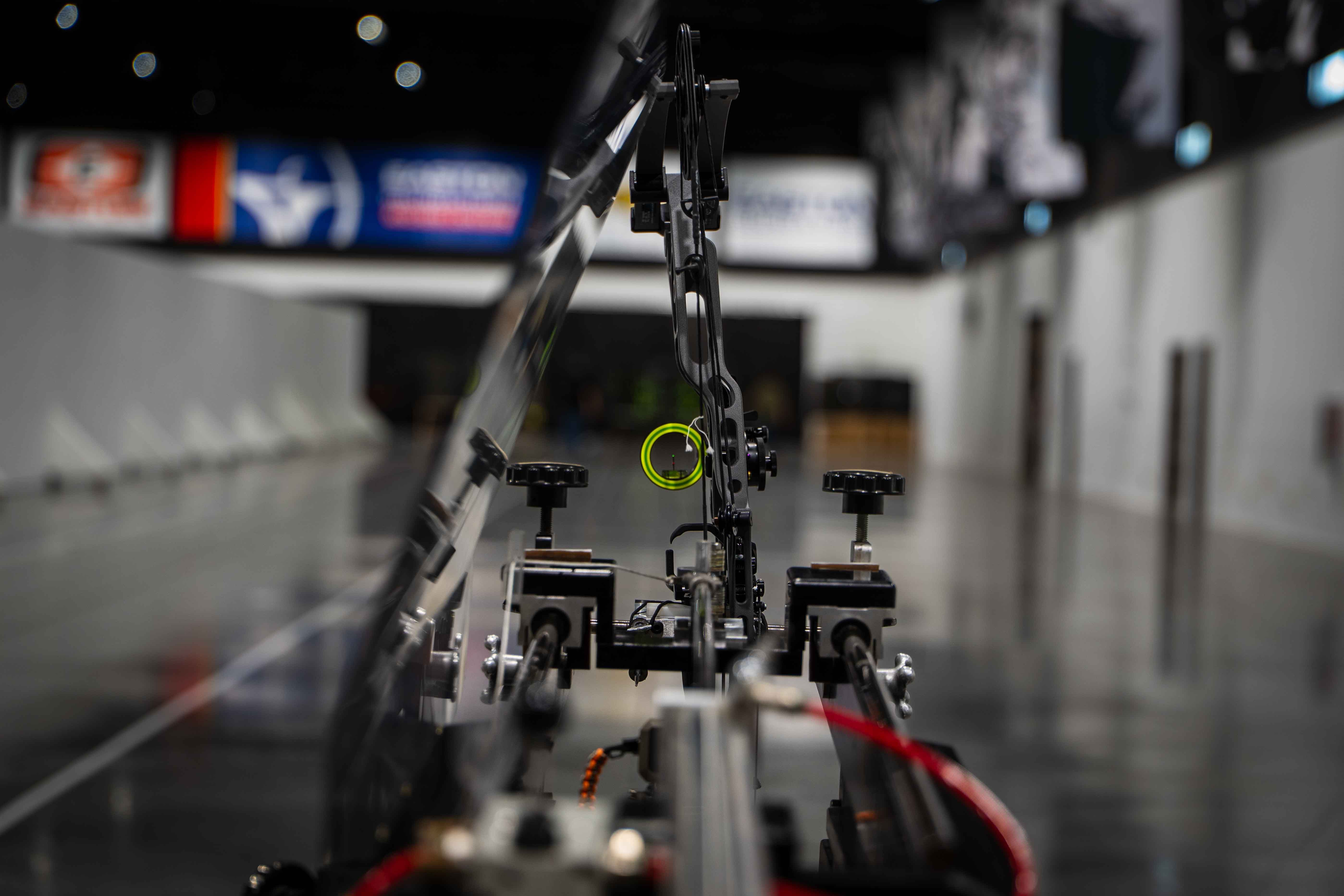
Easton Archery provided vital support—supplying shafts, a custom shooting machine, an indoor test facility, and primary funding. Their generous contribution was truly a selfless act for the advancement of archery.
Jamie Mcintosh | Archery Sound Lab
Jamie holds a Master's of Architectural Sciences degree specializing in Audio and Acoustics and runs an acoustic consultancy firm. The Archery Sound Lab led the controlled sound testing efforts for all vanes used in the study.
Black Ovis
Black Ovis built all of the test arrows used in the study to an exacting standard. They were also onsite throughout the testing days, repairing arrows as quickly as the shooting machine destroyed them.
Hoyt Bowhunting
Hoyt Bowhunting generously provided a pair of sister AX-2 test bows used in the study.
Preamble
This study focused on three key areas of arrow ballistics performance:
- Aerodynamic Drag: The resistive force acting against the arrow's forward movement, causing it to slow down, drift more in the wind, and lose energy as it travels downrange.
- Restorative Lift: A stabilizing force from the vanes, acting perpendicular to the arrow's flight, that helps correct the arrow's orientation and counteracts destabilizing effects (like broadhead lift or shooter torque).
- Sound Signature: The noise produced by the arrow as it passes through the air.
Said simply: we should all be interested in minimizing drag and sound while maximizing restorative lift.
Unfortunately, there’s no standard for arrow ballistics testing—and little third-party testing. That leaves a lot of room for bold marketing claims, influencer hype, and inconsistent manufacturer specs. It can be hard to separate fact from fiction.
This study was designed to change that. We purchased every component ourselves. No one on the team was paid or incentivized. Our only aim was to answer important questions—honestly and independently—and to share what we learned with the archery community.
Please note that we did what we could with the time and budget we had. We wish we could have tested more configurations and taken more shots with each. We've calculated 95% confidence intervals (statistical uncertainty) for all results to convey the degree of uncertainty due to the small sample sizes.
In the spirit of full transparency, all our methods, raw data, and analysis are freely available—use, challenge, or build on them as you see fit. For details on copyright and licensing, please see the notice below.
Let's Dive In.
How was this testing done?
Learn about the testing process, the equipment used, and the data collection methods.
I want the raw data!
Take a look at the raw data, or download the files to analyze yourself.